Oxford Martin Programme on the Wildlife Trade
  • Link to X
  • Link to Youtube
  • Link to Flickr
  • Home
  • About
    • Team
    • Advisory Committees
    • Collaborators
    • Sponsors
    • Reports
    • Contact Us
  • Research
    • Frameworks, approaches and methods
    • Case studies
    • Research Articles
  • Events
    • Upcoming Events
    • Past Events
      • 2018 IWT Event
      • 2017 Symposium
  • Resources
  • Trading Ideas
  • Menu Menu

Trading Ideas

How a null result sets the record straight on Harry & Hedwig

December 22, 2017

By: Diogo Veríssimo, Post doctoral Researcher, Oxford Martin Programme on the Illegal Wildlife Trade
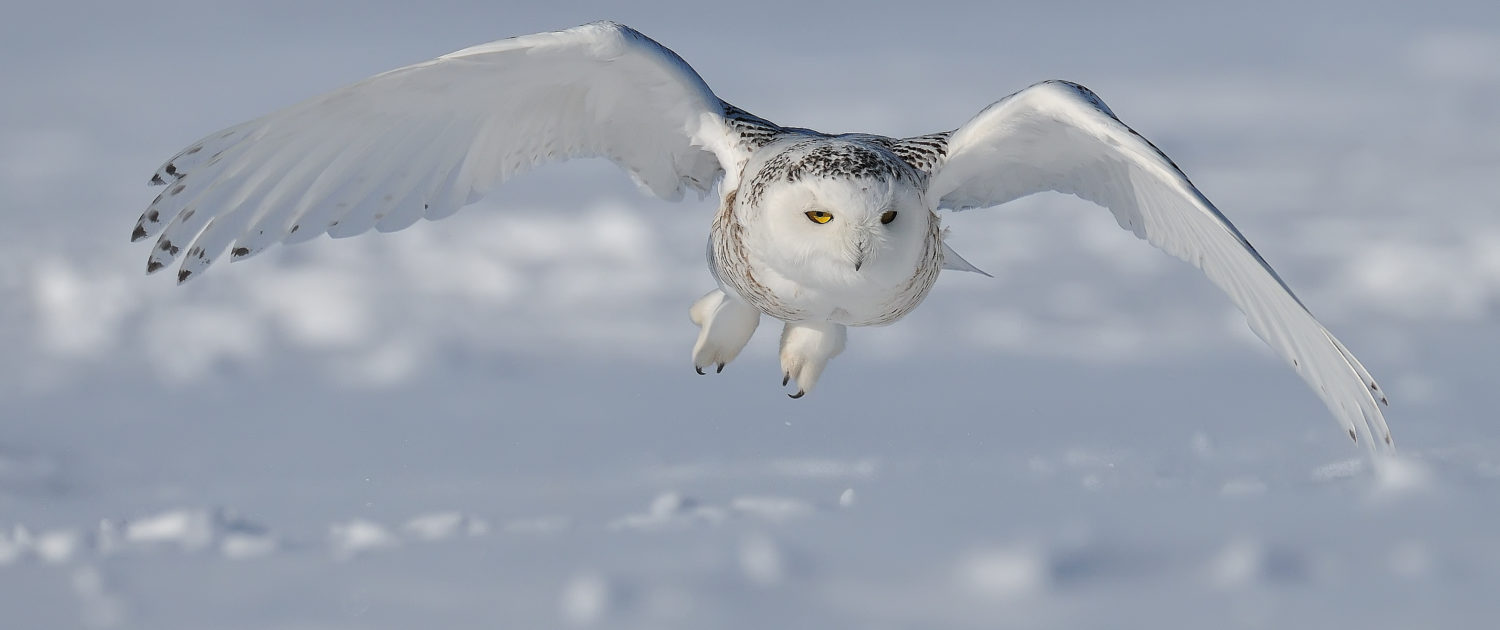
  • Credit: Bert de Tilly

Some stories are just too alluring not to be true. When in the early 2000’s several major media outlets in the UK reported that the increasing popularity of Harry Potter, the boy wizard that keeps a snowy owl as a pet, was leading to an increase in demand for pet owls, the narrative quickly gained a live of its own. It certainly seemed plausible that one of the largest literary and cinema phenomena of the last decades could have influenced the behavior of its audience and led to a surge in interest in owl keeping. The reach of these claims was such that J.K. Rowling, the creator of Harry Potter, released multiple statements asking her fans to give up on the idea of keeping owls as pets.

There was however, one important detail. While plausible, the link between Harry Potter and the owl trade relied solely on anecdotal information, sourced from a handful of people. However, complex relationships such as this can be tricky to understand and so we thought it would be key to have a more scientific look at the claims being made in the press. To do this, we started by first measuring the two variables in question: the number of owls kept as pets in the UK and the interest in Harry Potter, a basic step to be able to study any cause-effect relationship.
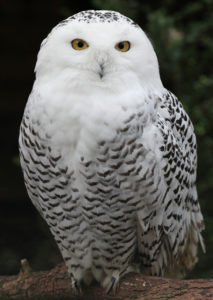
Snowy Owl. Photo credit: Peter-Schmidt

In terms of measuring owl demand, we leveraged the current UK legislation that makes it mandatory for owl owners to ring their birds. These rings are only available at a few locations and we used data from the British Bird Council and the Independent Bird Register, to see how owl ownership has changed over the last few decades in the UK. Measuring interest in Harry Potter is a little more challenging as it can manifest itself in many ways. Because of this, we used a suite of indicators: online searches, mentions in major newspapers, book sales and movie ticket sales. Yet, our analysis showed that none of these indicators was a good predictor of increase in owl demand. Thus, even though we had looked at the issue through multiple perspectives we could find no evidence of interest in Harry Potter driving the interest in owl purchases.

Considering the amount of press received in the past on the links between Harry Potter and the owl trade, I was expecting some interest in our results. To get the best possible chance of receiving some attention, we reached out to many of the journalists that had in the past covered this story, as soon as our results were published. The result was disappointing: no interest at all. Besides a few academics on social media, there was no media pick-up of our study.

It is common knowledge amongst the scientific community that studies which fail to find relationships between the variables being investigated (often called null results), receive much less attention, both from the scientists themselves as well as from the media. This means that these studies are often not published and when the results do see the light of day, they are rarely communicated to non-specialists. The problem with this scenario is that an appealing narrative, such as the link between Harry Potter and demand for owls, becomes nearly impossible to challenge, regardless of the lack for evidence to support it.

Setting the record straight, matters. We need the media to be open to correct on its own reporting when new evidence becomes available, particularly when a story has gained a lot of traction with the public. In the age of fake news, where the trust in the media is plummeting, it seems that more than ever it is key to understand that credibility does not mean being always right, but always being willing to correct past mistakes.


Article edited by: Nafeesa Esmail

Share this entry
  • Share on Facebook
  • Share on X
  • Share on WhatsApp
  • Share on Pinterest
  • Share on LinkedIn
  • Share on Reddit
https://illegalwildlifetrade.net/wp-content/uploads/2017/12/Snowy-Owl-Bert-de-Tilly.jpg 2095 3143 nafeesa http://illegalwildlifetrade.net/wp-content/uploads/2021/02/Logo_w_Strap_HoriztonalOMS-logo.png nafeesa2017-12-22 15:27:472019-11-29 14:00:24How a null result sets the record straight on Harry & Hedwig

Questions, feedback or want to trade your ideas?

Contact us

Recent Articles

  • Reflecting on wildlife trade researchAugust 6, 2021 - 10:24 am
  • Characterising wild meat consumers in Vietnam visual abstract. Credit: Alegria OlmedoAlegria Olmedo
    Characterising wild meat consumers in VietnamApril 30, 2021 - 12:20 pm
  • Conservation litigation could help tackle illegal wildlife tradeApril 22, 2021 - 4:05 pm
  • Jaguar. Credit: Melissa AriasMelissa Arias
    Complex interactions between commercial and noncommercial drivers of illegal trade for a threatened felidMarch 19, 2021 - 10:51 am
  • On the IWT horizon: Reshaping Africa’s role of wildlife trade and its relationship between economic systems and natureJuly 28, 2020 - 9:00 am
  • On the IWT horizon: Social Media – an emerging marketplace for ideas, (mis)information, and illegal wildlife tradeJune 5, 2020 - 8:20 am
  • On the IWT horizon: Species discoveries and descriptions that fuel wildlife traffickingMay 26, 2020 - 10:00 am
  • Haiwei store in Hong KongJ. Lam
    On the IWT horizon: Haiwei—Identifying the connection between a global demand for dried seafood and marine conservationMay 14, 2020 - 11:07 am
  • Proactive engagement with wildlife trade issues in an unsettled worldMay 12, 2020 - 11:50 am
  • OMP-WT
    What are the origins of novel human infectious diseases like COVID-19?May 5, 2020 - 1:45 pm
  • Position statement: managing wildlife trade in the context of COVID-19 and future zoonotic pandemicsApril 15, 2020 - 1:52 pm
  • Women at the Moutuka Nunene bushmeat market in Lukolela, Democratic Republic of Congo. Photo by Ollivier Girard/CIFOR
    The COVID-19 response and wild meat: a call for local contextApril 8, 2020 - 1:53 pm
  • A fish market in Seoul, South Korea. Rodrigo OyanedelOMP-WT
    Coronavirus: why a blanket ban on wildlife trade would not be the right responseApril 8, 2020 - 12:00 pm
  • Woman standing by a pound
    On COVID-19, and rebalancing our relationship with natureApril 3, 2020 - 2:04 pm
  • Menu of a wild meat restaurant in Wuhan Huanan seafood market, where civet, bamboo rat and other animals were sold. Photo credit: weiboOMP-WT
    China’s Announcement on Wildlife Trade – What’s New and What Does It Mean?February 28, 2020 - 2:17 pm
  • S. Romañach
    Targeting wildlife crime interventions through geographic profilingOctober 28, 2019 - 11:58 am
  • J. Onoja
    Is the demand for vulture parts in Nigeria affecting regional vulture populations?October 28, 2019 - 11:57 am
  • A. K. Y. Wan
    Illegal international trade in seahorses continues despite CITES regulationsOctober 28, 2019 - 11:56 am

Join & Contact us

11a Mansfield Rd
Oxford OX1 3SZ

info@illegalwildlifetrade.net

Twitter feed is not available at the moment.
OMS Logo ICCS Logo Oxford Internet Institute Logo
© Copyright - Oxford Martin Programme on the Wildlife Trade, University of Oxford
  • Link to X
  • Link to Youtube
  • Link to Flickr
  • Privacy Policy
  • Mailing List Privacy
  • Cookie Policy
Link to: Orchid trade: an overlooked conservation priority Link to: Orchid trade: an overlooked conservation priority Orchid trade: an overlooked conservation priority Link to: Jaguars in the media: what we know and do not know about illegal jaguar trade Link to: Jaguars in the media: what we know and do not know about illegal jaguar trade Jaguars in the media: what we know and do not know about illegal jaguar tra...
Scroll to top Scroll to top Scroll to top
We use cookies to ensure that we give you the best experience on our website. If you continue to use this site we will assume that you are happy with it.