Oxford Martin Programme on the Wildlife Trade
  • Link to X
  • Link to Youtube
  • Link to Flickr
  • Home
  • About
    • Team
    • Advisory Committees
    • Collaborators
    • Sponsors
    • Reports
    • Contact Us
  • Research
    • Frameworks, approaches and methods
    • Case studies
    • Research Articles
  • Events
    • Upcoming Events
    • Past Events
      • 2018 IWT Event
      • 2017 Symposium
  • Resources
  • Trading Ideas
  • Menu Menu

Trading Ideas

The not so bright future of the Andean Hairy Armadillo?

August 31, 2017

By: Carmen Julia Quiroga, Affiliated Researcher, Museo de Historia Natural Alcide d’Orbigny
  • Credit: Carmen Julia Quiroga

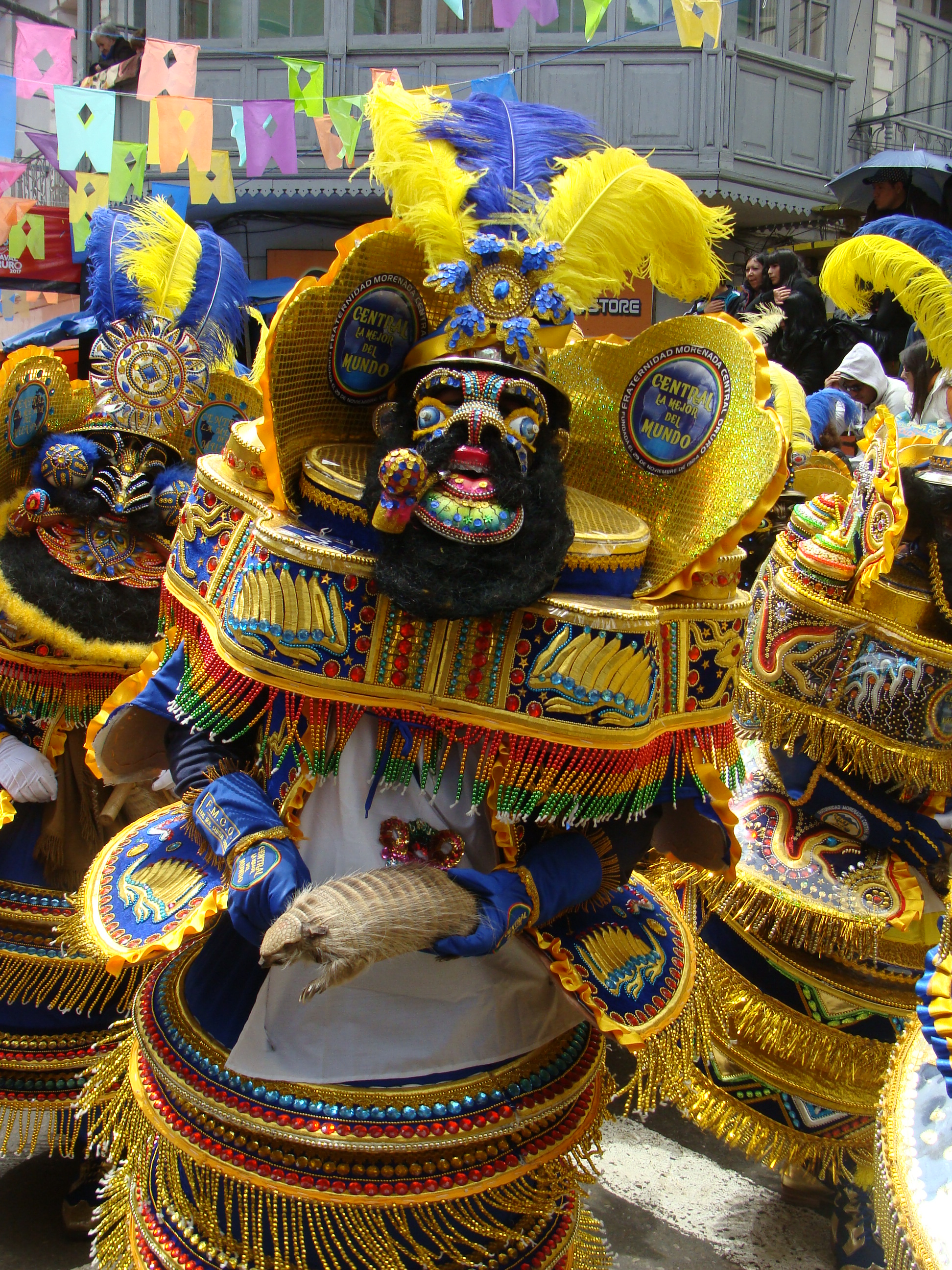
Attracting thousands of dancers and visitors, energetic bands and colourful costumes, every year the small Bolivian town of Oruro, hosts a UNESCO recognised Carnival, the Carnival of Oruro. While the party brings joy and a unique display of Andean culture, it is also a dark moment for the Andean hairy armadillo. Every year over 1,500 dancers use a music rattle as part of the costume, for which the main material is made from the Andean hairy armadillo. However, the production of this musical instrument is only one of the many cultural uses of the species across the Andes.

As part of my Master’s dissertation at DICE (Durrell Institute of Conservation and Ecology), I started research to better understand the utilisation and appreciation of the Andean hairy armadillo, thereby exploring the possibility to convert its cultural value into conservation impact. Urban areas of major Andean cities in Bolivia were chosen for data collection, making use of interviews, structured questionnaires, as well as visiting museums and local markets.

Results showed the Andean hairy armadillos to be sold and used as musical instruments, lucky charms, in traditional medicine and as pets. The legal framework in Bolivia is weak and ambiguous, as it the legislation relating to its trade – it is illegal to trade wildlife, unless for cultural uses. During Carnival alone, around 8000 pieces of wildlife are used in the costumes (armadillos, skins, feather and other parts). However, definitions and limitations of what is considered “cultural use” is non-existent. Few markets in the cities of Cochabamba and La Paz are controlled by municipal guards, and most merchants still offer dead armadillos on the side.

Analysing consumers’ responses to our questionnaires, the majority considered the species iconic for the Bolivian Andes and thus, they would not be willing to lose the species. Ironically, they also stated that the commercialization and use of this animal should not be forbidden nor stopped in the country because of its cultural use, demonstrating the need for further research to explore more cultural-friendly alternatives.

Building on these preliminary results, the Natural History Museum Alcide d’Orbigny, with the support of Cleveland Zoo has started a small project to collect complementary data outside urban areas. Subsequently, we found a far wider spread and open commercialization of armadillos in small markets, as well as along the borders with Peru and Chile. People from the communities heavily hunt the species as a side activity, despite it not being a major source of income. Additionally, the species’ habitat is rapidly degrading due to the growing production of quinoa farms for international markets which fetch high premiums. To make matters seem even more dire, due to a recent change on the Andean hairy armadillo’s taxonomic status, the species has lost its protection under CITES. Previously, when classified as Chaetophractus nationi, it was listed as an Appendix II species. With all this in mind, we are still trying to stay optimistic.

Despite the taxonomic status change of the species, the Bolivian government still considers the Andean Hairy Armadillo as an endangered species. An agreement has been signed between the Carnival Dancers Association and the Ministries of Culture and the Environment, stating the prohibition of the use of new wildlife parts during the Carnival parade. This will come into force as soon as the Ministry of Environment codes and records all the costumes currently in use. However, this process has still not started, thus we still aim to find a long-term culturally sensitive solution to this problem by further investigating hunting and consumer behaviours, as well as continuing to raise awareness within the Carnival communities and enlisting more dancers to stop sourcing armadillos for use in their costumes. Hopefully, with further funding and research, we will be able to scale up our work and increase our impact within the region.


Article edited by: Nafeesa Esmail

Share this entry
  • Share on Facebook
  • Share on X
  • Share on WhatsApp
  • Share on Pinterest
  • Share on LinkedIn
  • Share on Reddit
https://illegalwildlifetrade.net/wp-content/uploads/2017/08/6.Quiroga_crop-1.jpg 250 400 symposium http://illegalwildlifetrade.net/wp-content/uploads/2021/02/Logo_w_Strap_HoriztonalOMS-logo.png symposium2017-08-31 11:27:582019-11-29 14:07:21The not so bright future of the Andean Hairy Armadillo?

Questions, feedback or want to trade your ideas?

Contact us

Recent Articles

  • Reflecting on wildlife trade researchAugust 6, 2021 - 10:24 am
  • Characterising wild meat consumers in Vietnam visual abstract. Credit: Alegria OlmedoAlegria Olmedo
    Characterising wild meat consumers in VietnamApril 30, 2021 - 12:20 pm
  • Conservation litigation could help tackle illegal wildlife tradeApril 22, 2021 - 4:05 pm
  • Jaguar. Credit: Melissa AriasMelissa Arias
    Complex interactions between commercial and noncommercial drivers of illegal trade for a threatened felidMarch 19, 2021 - 10:51 am
  • On the IWT horizon: Reshaping Africa’s role of wildlife trade and its relationship between economic systems and natureJuly 28, 2020 - 9:00 am
  • On the IWT horizon: Social Media – an emerging marketplace for ideas, (mis)information, and illegal wildlife tradeJune 5, 2020 - 8:20 am
  • On the IWT horizon: Species discoveries and descriptions that fuel wildlife traffickingMay 26, 2020 - 10:00 am
  • Haiwei store in Hong KongJ. Lam
    On the IWT horizon: Haiwei—Identifying the connection between a global demand for dried seafood and marine conservationMay 14, 2020 - 11:07 am
  • Proactive engagement with wildlife trade issues in an unsettled worldMay 12, 2020 - 11:50 am
  • OMP-WT
    What are the origins of novel human infectious diseases like COVID-19?May 5, 2020 - 1:45 pm
  • Position statement: managing wildlife trade in the context of COVID-19 and future zoonotic pandemicsApril 15, 2020 - 1:52 pm
  • Women at the Moutuka Nunene bushmeat market in Lukolela, Democratic Republic of Congo. Photo by Ollivier Girard/CIFOR
    The COVID-19 response and wild meat: a call for local contextApril 8, 2020 - 1:53 pm
  • A fish market in Seoul, South Korea. Rodrigo OyanedelOMP-WT
    Coronavirus: why a blanket ban on wildlife trade would not be the right responseApril 8, 2020 - 12:00 pm
  • Woman standing by a pound
    On COVID-19, and rebalancing our relationship with natureApril 3, 2020 - 2:04 pm
  • Menu of a wild meat restaurant in Wuhan Huanan seafood market, where civet, bamboo rat and other animals were sold. Photo credit: weiboOMP-WT
    China’s Announcement on Wildlife Trade – What’s New and What Does It Mean?February 28, 2020 - 2:17 pm
  • S. Romañach
    Targeting wildlife crime interventions through geographic profilingOctober 28, 2019 - 11:58 am
  • J. Onoja
    Is the demand for vulture parts in Nigeria affecting regional vulture populations?October 28, 2019 - 11:57 am
  • A. K. Y. Wan
    Illegal international trade in seahorses continues despite CITES regulationsOctober 28, 2019 - 11:56 am

Join & Contact us

11a Mansfield Rd
Oxford OX1 3SZ

info@illegalwildlifetrade.net

Twitter feed is not available at the moment.
OMS Logo ICCS Logo Oxford Internet Institute Logo
© Copyright - Oxford Martin Programme on the Wildlife Trade, University of Oxford
  • Link to X
  • Link to Youtube
  • Link to Flickr
  • Privacy Policy
  • Mailing List Privacy
  • Cookie Policy
Link to: Report on Wildlife trade in Amazon countries: an analysis of trade in CITES-listed species released Link to: Report on Wildlife trade in Amazon countries: an analysis of trade in CITES-listed species released Report on Wildlife trade in Amazon countries: an analysis of trade in CITES-listed... Link to: Effectiveness of Celebrities in Conservation Marketing Link to: Effectiveness of Celebrities in Conservation Marketing Effectiveness of Celebrities in Conservation Marketing
Scroll to top Scroll to top Scroll to top
We use cookies to ensure that we give you the best experience on our website. If you continue to use this site we will assume that you are happy with it.