Oxford Martin Programme on the Wildlife Trade
  • Link to X
  • Link to Youtube
  • Link to Flickr
  • Home
  • About
    • Team
    • Advisory Committees
    • Collaborators
    • Sponsors
    • Reports
    • Contact Us
  • Research
    • Frameworks, approaches and methods
    • Case studies
    • Research Articles
  • Events
    • Upcoming Events
    • Past Events
      • 2018 IWT Event
      • 2017 Symposium
  • Resources
  • Trading Ideas
  • Menu Menu

Trading Ideas

How do we Understand Illegal Wildlife Trade?
April 26, 2017
  • Credit: Jacob Phelps

By: Jacob Phelps, Lecturer, Lancaster Environment Centre, Lancaster University


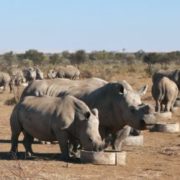
The term “wildlife trade” usually conjures up images of dead elephants, rhinoceros and tigers that are poached by organised criminal gangs for use in traditional Asian medicines, but there is far more to understanding wildlife trade.

A small number of charismatic species has been the narrow focus of most conservation efforts, funding, news and public attention. In reality, wildlife trade involves thousands of species and a wide range of products, from food to cosmetics to building materials. Even for a single species, this can involve very different products. For example, rhino horns are traded not only as medicines, but also as ornaments for carving. Unsurprisingly, these different species, products and situations involve different types of trade, including distinct roles for the harvesters, intermediaries (middlemen) and consumers involved.

Moreover, while wildlife trade is mostly portrayed as inherently illegal and nefarious, most wildlife trade is legal—including types of fishing, harvest of non-timber forest products, logging, and hunting for recreation and for meat. Even cases that may be ecological unsustainable are often legally permitted. In contrast, Illegal Wildlife Trade (IWT) specifically involves the harvest, trade and use of wildlife in ways that contravenes environmental regulations, such as protected area rules or the Convention on International Trade in Endangered Species of Wild Fauna and Flora (CITES).

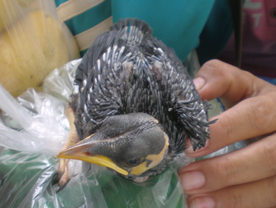
However, these types of nuances and diversity of contexts, products and actors are often overlooked, limiting our ability to design strong conservation projects. For example, the conservation lessons and policies designed to protect rhinoceros in Southern Africa may yield relatively few insights for people trying to protect parrots in Central Africa.

Our research group based at the Lancaster Environment Centre, works on a broad range of IWT issues, including the trade of wild ornamental orchids globally, edible frogs in Southeast Asia, aquarium fish in the Philippines, wildlife harvest within protected areas in Venezuela, and the lives of people arrested for IWT within Nepal’s prisons. Across this wide range of situations, we have struggled to identify ways of to systematically studying, understanding and discussing IWT.

In our recent paper in Frontiers in Ecology and the Environment, we propose some tools and terms that can help to address this challenge.

Summarised in this video, our framework helps researchers and practitioners to distinguish among different IWT species, products, actor roles and network structures, and can be applied in most contexts.

Table 1: Adopted from Phelps et al. Front Ecol Environ 2016; doi: 10.1002/fee.1325

Table 1: Adopted from Phelps et al. Front Ecol Environ 2016; doi: 10.1002/fee.1325

We distinguish among a huge diversity of actors potentially involved in IWT (Table 1) and argue that broad labels like “poacher”, “middleman”, and “criminal” fail to reflect the diverse realities and drivers of IWT. For example, IWT harvesters include local poor residents who occasionally, and opportunistically harvest wildlife to sell illegally as a supplementary livelihood. However, they also include people who have legal rights to harvest wildlife (e.g., from a timber concession), but abuse those rights by exceeding their legal quotas. Both cases represent IWT, and recognising these differences is essential to responding with tailored conservation interventions.

Research on the ground highlights that IWT is much more complex and diverse than is commonly recognised, and that we cannot base policies on lessons learned from single charismatic species or on popular myths about illegal trade. We need grounded research to specifically define products, characterise the people involved and understand the networks that link them, in order to create targeted interventions that are fair, realistic and effective. We hope that our framework will be tested and refined with a range of other contexts, and will help us to make comparisons, draw lessons and develop monitoring approaches across all IWT work.


Article edited by: Nafeesa Esmail
Share this entry
  • Share on Facebook
  • Share on X
  • Share on WhatsApp
  • Share on Pinterest
  • Share on LinkedIn
  • Share on Reddit
https://illegalwildlifetrade.net/wp-content/uploads/2017/04/1.Phelps_Table-page-e1516892614590.jpg 2613 1736 testuser http://illegalwildlifetrade.net/wp-content/uploads/2021/02/Logo_w_Strap_HoriztonalOMS-logo.png testuser2017-04-26 11:11:372019-11-29 14:07:30How do we Understand Illegal Wildlife Trade?
You might also like
Understanding complexities of the world’s biggest shark and ray fishery
The power of supportive collaborative efforts, capacity building and local involvement
Conservation litigation could help tackle illegal wildlife trade
Probing the Elephant in the Room
Jaguar. Credit: Melissa AriasMelissa Arias Complex interactions between commercial and noncommercial drivers of illegal trade for a threatened felid
Wildlife Trafficking and Security: Myths and Realities
Semi-intensive rhino breeding operation in South Africa Taking Stock of Stockpiles

Questions, feedback or want to trade your ideas?

Contact us

Recent Articles

  • Reflecting on wildlife trade researchAugust 6, 2021 - 10:24 am
  • Characterising wild meat consumers in Vietnam visual abstract. Credit: Alegria OlmedoAlegria Olmedo
    Characterising wild meat consumers in VietnamApril 30, 2021 - 12:20 pm
  • Conservation litigation could help tackle illegal wildlife tradeApril 22, 2021 - 4:05 pm
  • Jaguar. Credit: Melissa AriasMelissa Arias
    Complex interactions between commercial and noncommercial drivers of illegal trade for a threatened felidMarch 19, 2021 - 10:51 am
  • On the IWT horizon: Reshaping Africa’s role of wildlife trade and its relationship between economic systems and natureJuly 28, 2020 - 9:00 am
  • On the IWT horizon: Social Media – an emerging marketplace for ideas, (mis)information, and illegal wildlife tradeJune 5, 2020 - 8:20 am
  • On the IWT horizon: Species discoveries and descriptions that fuel wildlife traffickingMay 26, 2020 - 10:00 am
  • Haiwei store in Hong KongJ. Lam
    On the IWT horizon: Haiwei—Identifying the connection between a global demand for dried seafood and marine conservationMay 14, 2020 - 11:07 am
  • Proactive engagement with wildlife trade issues in an unsettled worldMay 12, 2020 - 11:50 am
  • OMP-WT
    What are the origins of novel human infectious diseases like COVID-19?May 5, 2020 - 1:45 pm
  • Position statement: managing wildlife trade in the context of COVID-19 and future zoonotic pandemicsApril 15, 2020 - 1:52 pm
  • Women at the Moutuka Nunene bushmeat market in Lukolela, Democratic Republic of Congo. Photo by Ollivier Girard/CIFOR
    The COVID-19 response and wild meat: a call for local contextApril 8, 2020 - 1:53 pm
  • A fish market in Seoul, South Korea. Rodrigo OyanedelOMP-WT
    Coronavirus: why a blanket ban on wildlife trade would not be the right responseApril 8, 2020 - 12:00 pm
  • Woman standing by a pound
    On COVID-19, and rebalancing our relationship with natureApril 3, 2020 - 2:04 pm
  • Menu of a wild meat restaurant in Wuhan Huanan seafood market, where civet, bamboo rat and other animals were sold. Photo credit: weiboOMP-WT
    China’s Announcement on Wildlife Trade – What’s New and What Does It Mean?February 28, 2020 - 2:17 pm
  • S. Romañach
    Targeting wildlife crime interventions through geographic profilingOctober 28, 2019 - 11:58 am
  • J. Onoja
    Is the demand for vulture parts in Nigeria affecting regional vulture populations?October 28, 2019 - 11:57 am
  • A. K. Y. Wan
    Illegal international trade in seahorses continues despite CITES regulationsOctober 28, 2019 - 11:56 am

Join & Contact us

11a Mansfield Rd
Oxford OX1 3SZ

info@illegalwildlifetrade.net

Twitter feed is not available at the moment.
OMS Logo ICCS Logo Oxford Internet Institute Logo
© Copyright - Oxford Martin Programme on the Wildlife Trade, University of Oxford
  • Link to X
  • Link to Youtube
  • Link to Flickr
  • Privacy Policy
  • Mailing List Privacy
  • Cookie Policy
Link to: Wildlife Trafficking and Security: Myths and Realities Link to: Wildlife Trafficking and Security: Myths and Realities Wildlife Trafficking and Security: Myths and Realities Link to: Call for Conservation Evidence on interventions on Wildlife Trade of Endangered Species Link to: Call for Conservation Evidence on interventions on Wildlife Trade of Endangered Species Call for Conservation Evidence on interventions on Wildlife Trade of Endangered...
Scroll to top Scroll to top Scroll to top
We use cookies to ensure that we give you the best experience on our website. If you continue to use this site we will assume that you are happy with it.