Oxford Martin Programme on the Wildlife Trade
  • Link to X
  • Link to Youtube
  • Link to Flickr
  • Home
  • About
    • Team
    • Advisory Committees
    • Collaborators
    • Sponsors
    • Reports
    • Contact Us
  • Research
    • Frameworks, approaches and methods
    • Case studies
    • Research Articles
  • Events
    • Upcoming Events
    • Past Events
      • 2018 IWT Event
      • 2017 Symposium
  • Resources
  • Trading Ideas
  • Menu Menu

Trading Ideas

Probing the Elephant in the Room
April 26, 2017
  • Credit: Stop Ivory

By: Vian Sharif , Doctoral Researcher, Oxford Martin Programme on Illegal Wildlife Trade and Alexander Rhodes, Managing Associate, Mishcon de Reya LLP


At first glance, the imminent extinction of the world’s most iconic species – for example, the black rhino – primarily looks like a challenge for conservation science. Yet, with rhino horn prices anecdotally exceeding $60,000 per kilogram on global black markets in recent years, at the heart of this issue is the behaviour of the buyer willing to pay prices higher than the street price of cocaine or gold to acquire it. Crucially, the need to understand the motivations and psychological drivers of consumers’ desire to acquire and own illegal wildlife products and influences upon them, like the media and tools commonly employed in commercial marketing campaigns, has now come to the fore as a potential means of reducing consumption.

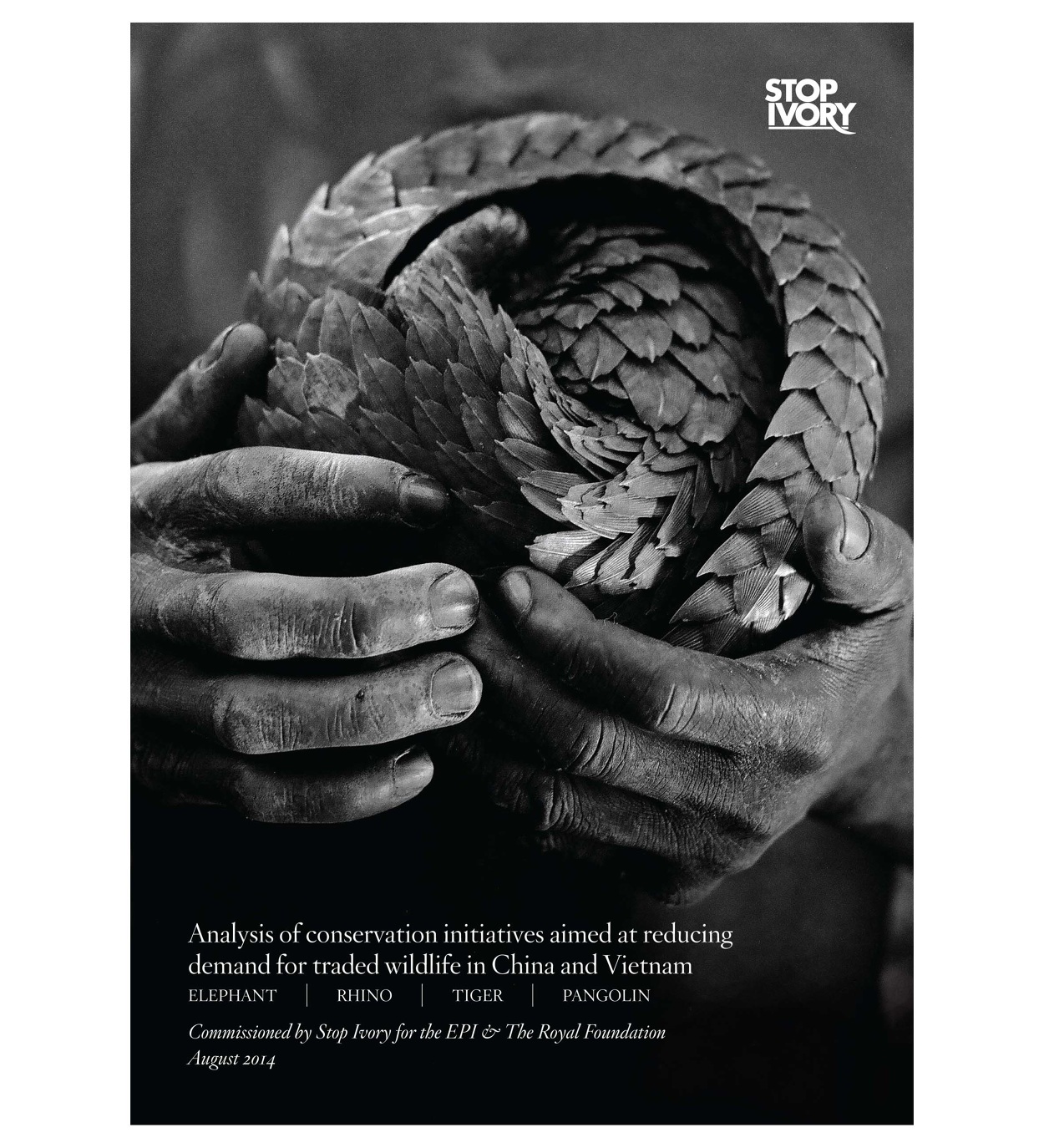
Our report, Analysis of conservation initiatives aimed at reducing demand for traded wildlife in China and Vietnam, commissioned by Stop Ivory for the Elephant Protection Initiative & The Royal Foundation aimed to set out for the first time in one central resource a summary and analysis of the major ‘demandside’ initiatives carried out between 2004-2014 in two key consumer markets, China and Vietnam, for elephant, rhino, tiger and pangolin products. The report provides an overview and analysis of their findings and outputs, and also includes the compilation of a searchable database of these initiatives by mapping existing campaigns, educational initiatives and market interventions used to initiate changes in key audiences, for example consumers or policy
makers.

By comprehensively scoping the activities taking place to address demand in consumer countries for illegal wildlife, we aimed to present the cumulative knowledge gathered by these initiatives in one open source resource made available to any organisation wishing to access it. We wanted to build an understanding of the most effective interventions to reduce demand for illegal wildlife products, and for this knowledge to contribute to the production of tools and guidance to support governments, nongovernment organisations (NGOs) and others in developing their campaigns. Through making this data available to all, we aim to provide a resource for those planning interventions, and the potential for discussion around future collaborations and interventions to achieve conservation impact in as efficient and effective manner as possible.

You may access the full report here


Article edited by: Nafeesa Esmail
Share this entry
  • Share on Facebook
  • Share on X
  • Share on WhatsApp
  • Share on Pinterest
  • Share on LinkedIn
  • Share on Reddit
https://illegalwildlifetrade.net/wp-content/uploads/2017/07/Pangolin_Stop-Ivory_crop-e1501000128501.png 250 400 symposium http://illegalwildlifetrade.net/wp-content/uploads/2021/02/Logo_w_Strap_HoriztonalOMS-logo.png symposium2017-04-26 09:00:152019-11-29 14:08:45Probing the Elephant in the Room
You might also like
Semi-intensive rhino breeding operation in South Africa Taking Stock of Stockpiles
How do we Understand Illegal Wildlife Trade?
The power of supportive collaborative efforts, capacity building and local involvement
Understanding complexities of the world’s biggest shark and ray fishery
Wildlife Trafficking and Security: Myths and Realities
Jaguar. Credit: Melissa AriasMelissa Arias Complex interactions between commercial and noncommercial drivers of illegal trade for a threatened felid

Questions, feedback or want to trade your ideas?

Contact us

Recent Articles

  • Reflecting on wildlife trade researchAugust 6, 2021 - 10:24 am
  • Characterising wild meat consumers in Vietnam visual abstract. Credit: Alegria OlmedoAlegria Olmedo
    Characterising wild meat consumers in VietnamApril 30, 2021 - 12:20 pm
  • Conservation litigation could help tackle illegal wildlife tradeApril 22, 2021 - 4:05 pm
  • Jaguar. Credit: Melissa AriasMelissa Arias
    Complex interactions between commercial and noncommercial drivers of illegal trade for a threatened felidMarch 19, 2021 - 10:51 am
  • On the IWT horizon: Reshaping Africa’s role of wildlife trade and its relationship between economic systems and natureJuly 28, 2020 - 9:00 am
  • On the IWT horizon: Social Media – an emerging marketplace for ideas, (mis)information, and illegal wildlife tradeJune 5, 2020 - 8:20 am
  • On the IWT horizon: Species discoveries and descriptions that fuel wildlife traffickingMay 26, 2020 - 10:00 am
  • Haiwei store in Hong KongJ. Lam
    On the IWT horizon: Haiwei—Identifying the connection between a global demand for dried seafood and marine conservationMay 14, 2020 - 11:07 am
  • Proactive engagement with wildlife trade issues in an unsettled worldMay 12, 2020 - 11:50 am
  • OMP-WT
    What are the origins of novel human infectious diseases like COVID-19?May 5, 2020 - 1:45 pm
  • Position statement: managing wildlife trade in the context of COVID-19 and future zoonotic pandemicsApril 15, 2020 - 1:52 pm
  • Women at the Moutuka Nunene bushmeat market in Lukolela, Democratic Republic of Congo. Photo by Ollivier Girard/CIFOR
    The COVID-19 response and wild meat: a call for local contextApril 8, 2020 - 1:53 pm
  • A fish market in Seoul, South Korea. Rodrigo OyanedelOMP-WT
    Coronavirus: why a blanket ban on wildlife trade would not be the right responseApril 8, 2020 - 12:00 pm
  • Woman standing by a pound
    On COVID-19, and rebalancing our relationship with natureApril 3, 2020 - 2:04 pm
  • Menu of a wild meat restaurant in Wuhan Huanan seafood market, where civet, bamboo rat and other animals were sold. Photo credit: weiboOMP-WT
    China’s Announcement on Wildlife Trade – What’s New and What Does It Mean?February 28, 2020 - 2:17 pm
  • S. Romañach
    Targeting wildlife crime interventions through geographic profilingOctober 28, 2019 - 11:58 am
  • J. Onoja
    Is the demand for vulture parts in Nigeria affecting regional vulture populations?October 28, 2019 - 11:57 am
  • A. K. Y. Wan
    Illegal international trade in seahorses continues despite CITES regulationsOctober 28, 2019 - 11:56 am

Join & Contact us

11a Mansfield Rd
Oxford OX1 3SZ

info@illegalwildlifetrade.net

Twitter feed is not available at the moment.
OMS Logo ICCS Logo Oxford Internet Institute Logo
© Copyright - Oxford Martin Programme on the Wildlife Trade, University of Oxford
  • Link to X
  • Link to Youtube
  • Link to Flickr
  • Privacy Policy
  • Mailing List Privacy
  • Cookie Policy
Link to: Taking Stock of Stockpiles Link to: Taking Stock of Stockpiles Semi-intensive rhino breeding operation in South AfricaTaking Stock of Stockpiles
Scroll to top Scroll to top Scroll to top
We use cookies to ensure that we give you the best experience on our website. If you continue to use this site we will assume that you are happy with it.