Oxford Martin Programme on the Wildlife Trade
  • Link to X
  • Link to Youtube
  • Link to Flickr
  • Home
  • About
    • Team
    • Advisory Committees
    • Collaborators
    • Sponsors
    • Reports
    • Contact Us
  • Research
    • Frameworks, approaches and methods
    • Case studies
    • Research Articles
  • Events
    • Upcoming Events
    • Past Events
      • 2018 IWT Event
      • 2017 Symposium
  • Resources
  • Trading Ideas
  • Menu Menu

Trading Ideas

Taking Stock of Stockpiles
April 26, 2017
  • Credit: Michael ‘t Sas-Rolfes

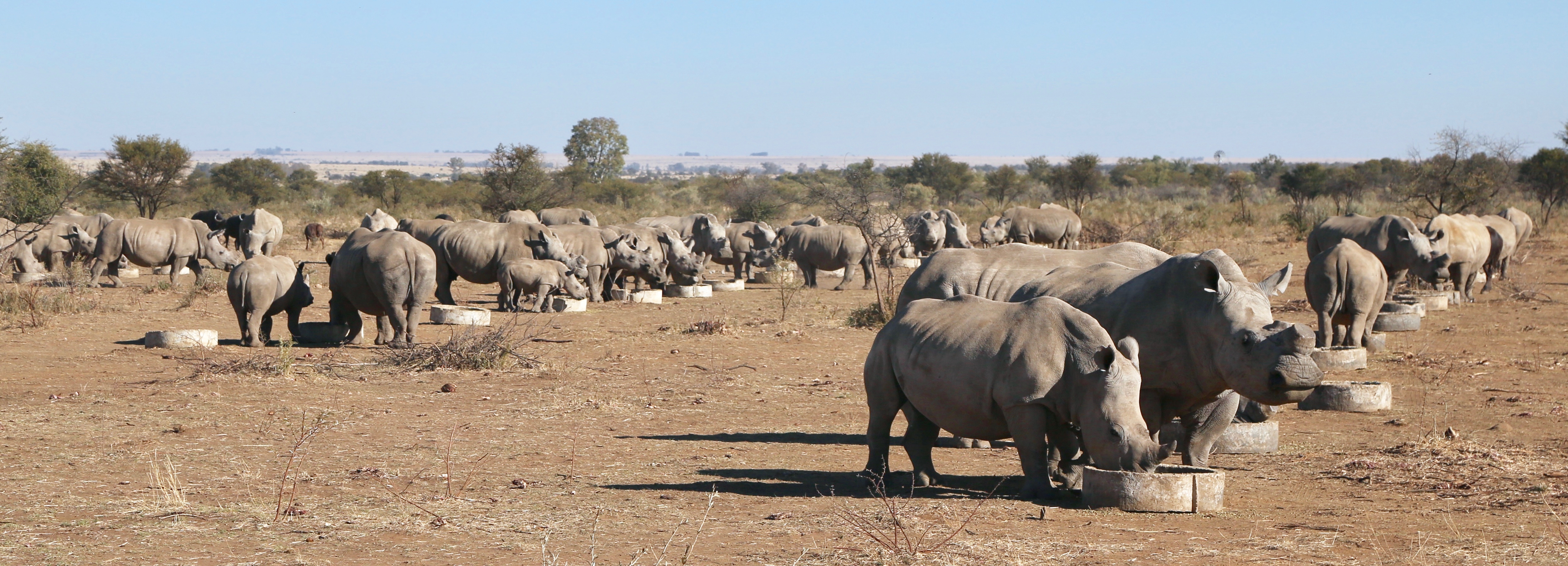
    Semi-intensive rhino breeding operation in South Africa

By: Michael ‘t Sas-Rolfes, Doctoral Researcher, Oxford Martin Programme on Illegal Wildlife Trade

The rapidly growing awareness of the serious extent to which illegal and unsustainable wildlife exploitation threatens the conservation of many endangered species is certainly timely. Yet amidst the current fervour for combatting illegal wildlife trade, the use of certain policy measures may be confounded by the continued existence of residual legal activities that potentially complicate both enforcement and efforts to change consumer behaviour. For this reason, many activists prefer an uncompromising approach: total prohibition of all forms of legal supply, consumptive use and trade of endangered species products, supported by simple demand reduction messaging to consumers of the ‘just say no’ variety. However, this extreme approach may be neither realistically achievable nor even desirable.

At present, legal supply – and even some legal trade – of certain endangered species products persists. For example, significant numbers of tigers, lions, bears and even rhinos are maintained in commercial captive breeding operations in countries such as China, Vietnam, Laos, Thailand and South Africa, yielding considerable volumes of marketable products. Residual legal trade in antique elephant ivory and rhino horn artefacts also persists in many countries and some elephant and rhino range states continue to accumulate official stockpiles of raw ivory and rhino horn. Attempts to curtail these activities through international pressure have met with obvious resistance from certain countries and powerful interest groups within them, including numerous persistent consumers. It seems likely that captive live specimens and product stockpiles will continue to challenge policy-makers for the foreseeable future.

Before investing substantial resources in trying to eliminate such residual supply sources, policy-makers should carefully consider the extent to which these in fact threaten wild populations of endangered species. One hypothesis holds that the existence of any commercial captive breeding operations and saleable stocks of endangered species products both stimulates demand for illegal, wild-harvested products of those species and provides cover for illegal activity. However, as an alternative hypothesis captive populations and product stockpiles may provide a critical ‘buffer’ role, shielding wild populations from certain forms of illegal exploitation by meeting persistent residual demand or acting as a deterrent to coordinated overexploitation aimed at ‘banking on extinction’.

The answer as to which hypothesis is correct may vary with species, geography and circumstance: there are numerous factors that must be considered, including whether consumers might co-operate in discerning between supply sources that are legal, ethical and sustainable and those that are not. Careful examination of multiple cases may result in a deeper understanding of some of the typical critical factors and risks. Using contemporary techniques such as participatory modelling and scenario analysis, the Oxford Martin Programme on the Illegal Wildlife Trade will seek to assess conditions under which policy decisions are robust to uncertainty. We intend to draw on existing accessible data to engage with difficult decisions relating to rhino poaching and lion bone trade policy and hope to learn broader lessons that might apply to issues such as residual elephant ivory trade and the management of accumulating stockpiles of endangered species products subject to persistent consumer demand.


Article edited by: Nafeesa Esmail
Share this entry
  • Share on Facebook
  • Share on X
  • Share on WhatsApp
  • Share on Pinterest
  • Share on LinkedIn
  • Share on Reddit
https://illegalwildlifetrade.net/wp-content/uploads/2017/07/1-4-e1501172043865.jpg 250 400 symposium http://illegalwildlifetrade.net/wp-content/uploads/2021/02/Logo_w_Strap_HoriztonalOMS-logo.png symposium2017-04-26 09:30:152019-11-29 14:08:32Taking Stock of Stockpiles
You might also like
Wildlife Trafficking and Security: Myths and Realities
Probing the Elephant in the Room
Understanding complexities of the world’s biggest shark and ray fishery
How do we Understand Illegal Wildlife Trade?
The power of supportive collaborative efforts, capacity building and local involvement

Questions, feedback or want to trade your ideas?

Contact us

Recent Articles

  • Reflecting on wildlife trade researchAugust 6, 2021 - 10:24 am
  • Characterising wild meat consumers in Vietnam visual abstract. Credit: Alegria OlmedoAlegria Olmedo
    Characterising wild meat consumers in VietnamApril 30, 2021 - 12:20 pm
  • Conservation litigation could help tackle illegal wildlife tradeApril 22, 2021 - 4:05 pm
  • Jaguar. Credit: Melissa AriasMelissa Arias
    Complex interactions between commercial and noncommercial drivers of illegal trade for a threatened felidMarch 19, 2021 - 10:51 am
  • On the IWT horizon: Reshaping Africa’s role of wildlife trade and its relationship between economic systems and natureJuly 28, 2020 - 9:00 am
  • On the IWT horizon: Social Media – an emerging marketplace for ideas, (mis)information, and illegal wildlife tradeJune 5, 2020 - 8:20 am
  • On the IWT horizon: Species discoveries and descriptions that fuel wildlife traffickingMay 26, 2020 - 10:00 am
  • Haiwei store in Hong KongJ. Lam
    On the IWT horizon: Haiwei—Identifying the connection between a global demand for dried seafood and marine conservationMay 14, 2020 - 11:07 am
  • Proactive engagement with wildlife trade issues in an unsettled worldMay 12, 2020 - 11:50 am
  • OMP-WT
    What are the origins of novel human infectious diseases like COVID-19?May 5, 2020 - 1:45 pm
  • Position statement: managing wildlife trade in the context of COVID-19 and future zoonotic pandemicsApril 15, 2020 - 1:52 pm
  • Women at the Moutuka Nunene bushmeat market in Lukolela, Democratic Republic of Congo. Photo by Ollivier Girard/CIFOR
    The COVID-19 response and wild meat: a call for local contextApril 8, 2020 - 1:53 pm
  • A fish market in Seoul, South Korea. Rodrigo OyanedelOMP-WT
    Coronavirus: why a blanket ban on wildlife trade would not be the right responseApril 8, 2020 - 12:00 pm
  • Woman standing by a pound
    On COVID-19, and rebalancing our relationship with natureApril 3, 2020 - 2:04 pm
  • Menu of a wild meat restaurant in Wuhan Huanan seafood market, where civet, bamboo rat and other animals were sold. Photo credit: weiboOMP-WT
    China’s Announcement on Wildlife Trade – What’s New and What Does It Mean?February 28, 2020 - 2:17 pm
  • S. Romañach
    Targeting wildlife crime interventions through geographic profilingOctober 28, 2019 - 11:58 am
  • J. Onoja
    Is the demand for vulture parts in Nigeria affecting regional vulture populations?October 28, 2019 - 11:57 am
  • A. K. Y. Wan
    Illegal international trade in seahorses continues despite CITES regulationsOctober 28, 2019 - 11:56 am

Join & Contact us

11a Mansfield Rd
Oxford OX1 3SZ

info@illegalwildlifetrade.net

Twitter feed is not available at the moment.
OMS Logo ICCS Logo Oxford Internet Institute Logo
© Copyright - Oxford Martin Programme on the Wildlife Trade, University of Oxford
  • Link to X
  • Link to Youtube
  • Link to Flickr
  • Privacy Policy
  • Mailing List Privacy
  • Cookie Policy
Link to: Probing the Elephant in the Room Link to: Probing the Elephant in the Room Probing the Elephant in the Room Link to: The power of supportive collaborative efforts, capacity building and local involvement Link to: The power of supportive collaborative efforts, capacity building and local involvement The power of supportive collaborative efforts, capacity building and local ...
Scroll to top Scroll to top Scroll to top
We use cookies to ensure that we give you the best experience on our website. If you continue to use this site we will assume that you are happy with it.