Oxford Martin Programme on the Wildlife Trade
  • Link to X
  • Link to Youtube
  • Link to Flickr
  • Home
  • About
    • Team
    • Advisory Committees
    • Collaborators
    • Sponsors
    • Reports
    • Contact Us
  • Research
    • Frameworks, approaches and methods
    • Case studies
    • Research Articles
  • Events
    • Upcoming Events
    • Past Events
      • 2018 IWT Event
      • 2017 Symposium
  • Resources
  • Trading Ideas
  • Menu Menu

Trading Ideas

The power of supportive collaborative efforts, capacity building and local involvement
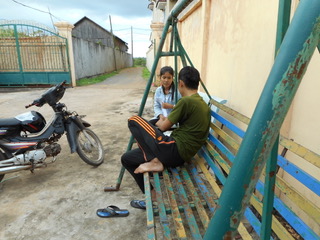
April 26, 2017
  • Credit: T.Lim


By: Elizabeth Davis, David O’Connor and Jenny Anne Glikman, Research Associates, San Diego Zoo Global


In 2014, San Diego Zoo Global (SDZG) began collaborating with Free The Bears, a number of universities and governments in SE Asia to address wildlife trade. The aim was to develop a framework that could be effectively and easily used by diverse organisations, regionally to gather data on the public knowledge, attitudes, behaviours, preferences, influences and consumption patterns of wildlife products. With a core set of questions, and the use of complementary methods (in-person surveys and semi-structured interviews), data collected from Vietnam, Cambodia, and Laos can be analysed together to begin to provide a better regional picture of the dynamics and drivers of wildlife trade consumption. Not only will this inform the development of demand change interventions, but this will also allow researchers to track outcomes of such efforts to gauge efficacy over time. There are numerous researchers and organizations gathering data across the region, but unfortunately the data is not necessarily sharable.

We began with preliminary surveys about bears and use of bear parts in northern Laos from Lao nationals, Western tourists, and Chinese tourists. The goal of these surveys was to understand perceptions of bears in northern Laos, as well as to understand what aspects of the questionnaire worked, and did not work, in a Southeast Asian context. Results thus far indicate that knowledge about the link between bear part usage and decline in bear populations is low among Lao people, but high among Chinese tourists visiting Laos. It is possible that this greater knowledge of use and impact on bear populations is what has caused Chinese tourists to cite their preferred bear bile type as synthetic, rather than from wild bears, though further investigation is needed.

Lessons learnt informed an improved and refined questionnaire which is currently being used in surveys in Cambodia, again on bears and bear parts. At the same time, semi-structured interviews also took place in Phnom Penh, resulting in qualitative data that will complement the results found in the quantitative survey. Preliminary results identify bear part use to be among middle to upper-middle status Cambodian individuals, particularly when an individual has a connection or affinity towards Chinese individuals. Bearskin was heavily cited as a product in use, but the lack of wildlife trafficking data for bearskin highlights the need to explore this further.

SDZG and Animals Asia is also surveying Traditional Medicine Practitioners in Vietnam to understand traditional medicine practice involving bear products, through mail-in surveys. Although a different methodology, these surveys complement the work performed in Cambodia and Laos.

In collaboration with Free The Bears, Animals Asia, TRAFFIC Vietnam and the Oxford Martin Programme on the Illegal Wildlife Trade (OMP-IWT), we will build on the work from Laos and Cambodia with public attitude surveys across Vietnam on bears and bear part usage, as well as on tiger part and saiga horn (ling yang, 羚羊) usage.

The OMP-IWT case study on bear bile in China aims to include core elements of the SDZG SE Asia bear surveys, working towards gaining a regional understanding. Greater refined mixed-methods research will be imperative for truly understanding the trends and patterns we isolate in IWT. The OMP-IWT is sure to be a dynamic research-to-action body, utilising complementary mixed-methods applications and catalysing collaborations.


Article edited by: Nafeesa Esmail
Share this entry
  • Share on Facebook
  • Share on X
  • Share on WhatsApp
  • Share on Pinterest
  • Share on LinkedIn
  • Share on Reddit
https://illegalwildlifetrade.net/wp-content/uploads/2017/07/Social-survey_T.Lim_crop-1-e1500999636863.jpg 250 400 symposium http://illegalwildlifetrade.net/wp-content/uploads/2021/02/Logo_w_Strap_HoriztonalOMS-logo.png symposium2017-04-26 10:00:412019-11-29 14:08:17The power of supportive collaborative efforts, capacity building and local involvement
You might also like
Understanding complexities of the world’s biggest shark and ray fishery
How do we Understand Illegal Wildlife Trade?
Conservation litigation could help tackle illegal wildlife trade
Semi-intensive rhino breeding operation in South Africa Taking Stock of Stockpiles
Jaguar. Credit: Melissa AriasMelissa Arias Complex interactions between commercial and noncommercial drivers of illegal trade for a threatened felid
Wildlife Trafficking and Security: Myths and Realities
Probing the Elephant in the Room

Questions, feedback or want to trade your ideas?

Contact us

Recent Articles

  • Reflecting on wildlife trade researchAugust 6, 2021 - 10:24 am
  • Characterising wild meat consumers in Vietnam visual abstract. Credit: Alegria OlmedoAlegria Olmedo
    Characterising wild meat consumers in VietnamApril 30, 2021 - 12:20 pm
  • Conservation litigation could help tackle illegal wildlife tradeApril 22, 2021 - 4:05 pm
  • Jaguar. Credit: Melissa AriasMelissa Arias
    Complex interactions between commercial and noncommercial drivers of illegal trade for a threatened felidMarch 19, 2021 - 10:51 am
  • On the IWT horizon: Reshaping Africa’s role of wildlife trade and its relationship between economic systems and natureJuly 28, 2020 - 9:00 am
  • On the IWT horizon: Social Media – an emerging marketplace for ideas, (mis)information, and illegal wildlife tradeJune 5, 2020 - 8:20 am
  • On the IWT horizon: Species discoveries and descriptions that fuel wildlife traffickingMay 26, 2020 - 10:00 am
  • Haiwei store in Hong KongJ. Lam
    On the IWT horizon: Haiwei—Identifying the connection between a global demand for dried seafood and marine conservationMay 14, 2020 - 11:07 am
  • Proactive engagement with wildlife trade issues in an unsettled worldMay 12, 2020 - 11:50 am
  • OMP-WT
    What are the origins of novel human infectious diseases like COVID-19?May 5, 2020 - 1:45 pm
  • Position statement: managing wildlife trade in the context of COVID-19 and future zoonotic pandemicsApril 15, 2020 - 1:52 pm
  • Women at the Moutuka Nunene bushmeat market in Lukolela, Democratic Republic of Congo. Photo by Ollivier Girard/CIFOR
    The COVID-19 response and wild meat: a call for local contextApril 8, 2020 - 1:53 pm
  • A fish market in Seoul, South Korea. Rodrigo OyanedelOMP-WT
    Coronavirus: why a blanket ban on wildlife trade would not be the right responseApril 8, 2020 - 12:00 pm
  • Woman standing by a pound
    On COVID-19, and rebalancing our relationship with natureApril 3, 2020 - 2:04 pm
  • Menu of a wild meat restaurant in Wuhan Huanan seafood market, where civet, bamboo rat and other animals were sold. Photo credit: weiboOMP-WT
    China’s Announcement on Wildlife Trade – What’s New and What Does It Mean?February 28, 2020 - 2:17 pm
  • S. Romañach
    Targeting wildlife crime interventions through geographic profilingOctober 28, 2019 - 11:58 am
  • J. Onoja
    Is the demand for vulture parts in Nigeria affecting regional vulture populations?October 28, 2019 - 11:57 am
  • A. K. Y. Wan
    Illegal international trade in seahorses continues despite CITES regulationsOctober 28, 2019 - 11:56 am

Join & Contact us

11a Mansfield Rd
Oxford OX1 3SZ

info@illegalwildlifetrade.net

Twitter feed is not available at the moment.
OMS Logo ICCS Logo Oxford Internet Institute Logo
© Copyright - Oxford Martin Programme on the Wildlife Trade, University of Oxford
  • Link to X
  • Link to Youtube
  • Link to Flickr
  • Privacy Policy
  • Mailing List Privacy
  • Cookie Policy
Link to: Taking Stock of Stockpiles Link to: Taking Stock of Stockpiles Taking Stock of StockpilesSemi-intensive rhino breeding operation in South Africa Link to: Understanding complexities of the world’s biggest shark and ray fishery Link to: Understanding complexities of the world’s biggest shark and ray fishery Understanding complexities of the world’s biggest shark and ray fishery
Scroll to top Scroll to top Scroll to top
We use cookies to ensure that we give you the best experience on our website. If you continue to use this site we will assume that you are happy with it.